

With growing privacy concerns and compliance requirements, many marketers hesitate to really dig into their data. But page views, bounce rates, and other basic metrics only show part of the picture.
To truly understand your audience, you need to go beyond surface-level metrics and analyse behaviour. And advanced marketing analytics helps attribute conversions and guide smarter decisions while still respecting user privacy.
This article explores what advanced marketing analytics can look like in practice. You’ll learn how deeper insights can help you personalise campaigns, improve performance, and build trust using privacy-first marketing strategies.
What is advanced marketing analytics?
Advanced marketing analytics involves using predictive models, customer segmentation and behavioural insights to examine data beyond basic page analytics like views, clicks, and bounce rates.
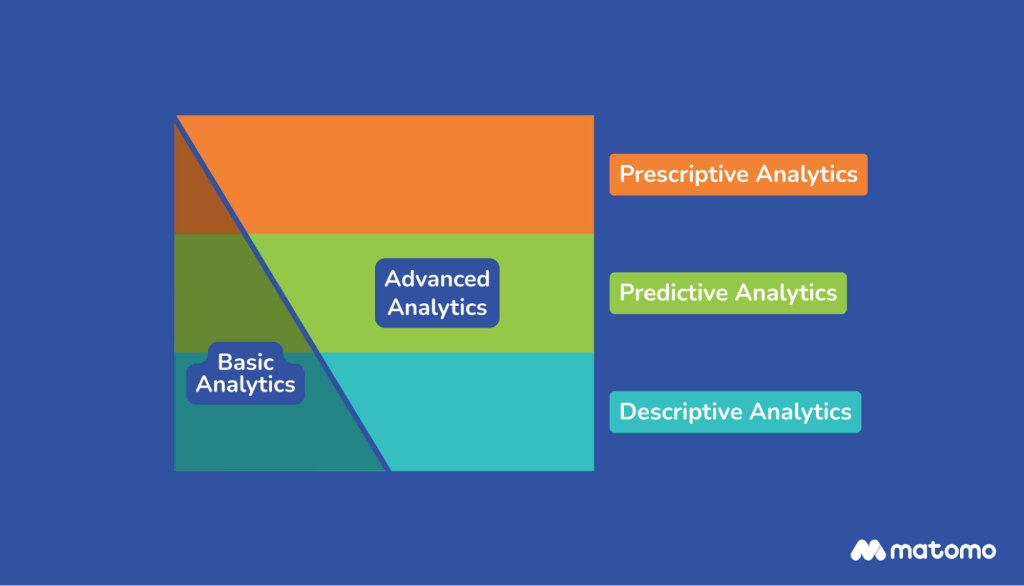
Basic analytics show what happens on your website, while advanced analytics reveal the factors driving user actions.
The importance of advanced analytics is increasing with customers expecting more personalisation and competition growing fiercer, marketers must use real customer data to make smarter decisions.
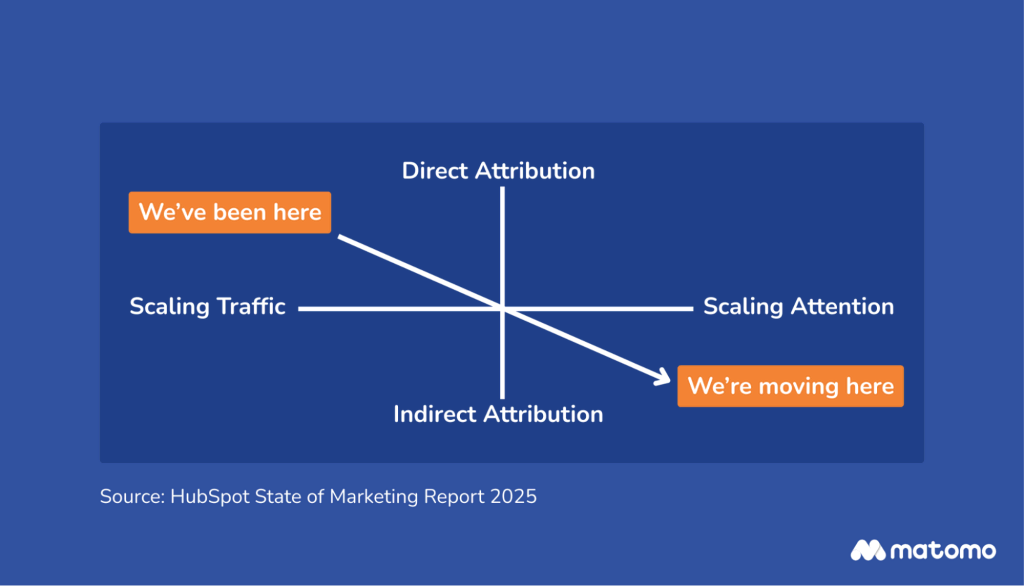
Advanced marketing analytics provides the foundation for this, allowing businesses to design marketing campaigns that align with customer needs.
Common techniques in advanced marketing analytics
Advanced analytics let marketers go beyond surface-level marketing data and uncover strategic insights. Common tactics and techniques include:
- Predictive modelling uses historical data to forecast trends, such as customer conversion or churn.
- Customer segmentation groups audiences by shared characteristics or behaviours, allowing for more precise targeting and personalised experiences.
- Behavioural analysis helps interpret user interactions across marketing channels, revealing friction points and ways to improve engagement.
- Multi-channel attribution models monitor how touchpoints across email, social media, organic search and paid ads contribute to conversions.
- Multivariate testing shows how different elements on a webpage interact (e.g., headline variations, CTA button colour and placement) to find the most effective combination.
- Cohort analysis examines user groups over time to understand retention, loyalty and engagement patterns.
- Customer lifetime value (CLV) analysis estimates long-term revenue from customer segments, guiding resource allocation.
- Form analytics show where users are struggling to complete forms or abandoning them altogether.
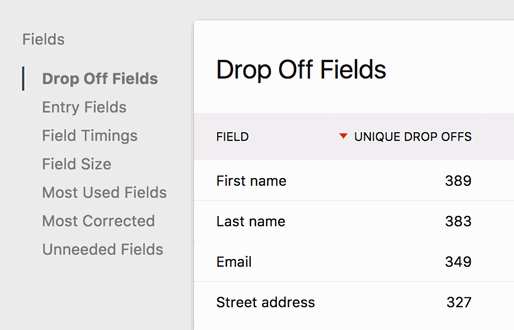
Matomo Form Analytics showing unique drop-offs per form field
Together, these features help teams understand what’s working, identify and adjust what’s not, and direct resources toward the segment with the most potential.
What about basic digital marketing analytics?
Basic tools provide an entry-level view of marketing performance. The data is still valuable, but it doesn’t always drill down as deeply as advanced tools.
Common features include:
- Website traffic reports measure website visits, sessions and users over time.
- Page views and top content reports show which pages and content draw the most visitors.
- Engagement metrics and key website KPIs, such as bounce rate, time spent on page and pages per session, help marketers assess engagement.
- Referral sources show where the traffic comes from, like organic search or paid advertising.
- Audience segmentation divides users into groups based on device type, location, or whether they are new visitors.
- Goal tracking logs simple conversions such as form completions, sign-ups or purchases.
- Conversion rate tracking measures the percentage of visitors who complete actions like booking a demo or signing up for a free trial.
- A/B testing compares alternate versions of a specific variable (like background colour or CTA placement) to see which is more effective.
These tools are valuable for foundational reporting and spotting trends, but they lack the depth and predictive capabilities that advanced analytics provide.
What are the four types of advanced marketing analytics?
There are four main types of advanced marketing analytics:
- Descriptive
- Diagnostic
- Predictive
- Prescriptive
Each plays a different role in understanding your customer base, optimising marketing activities, and shaping long-term campaign strategies.
Descriptive analytics: Unveiling the “what”
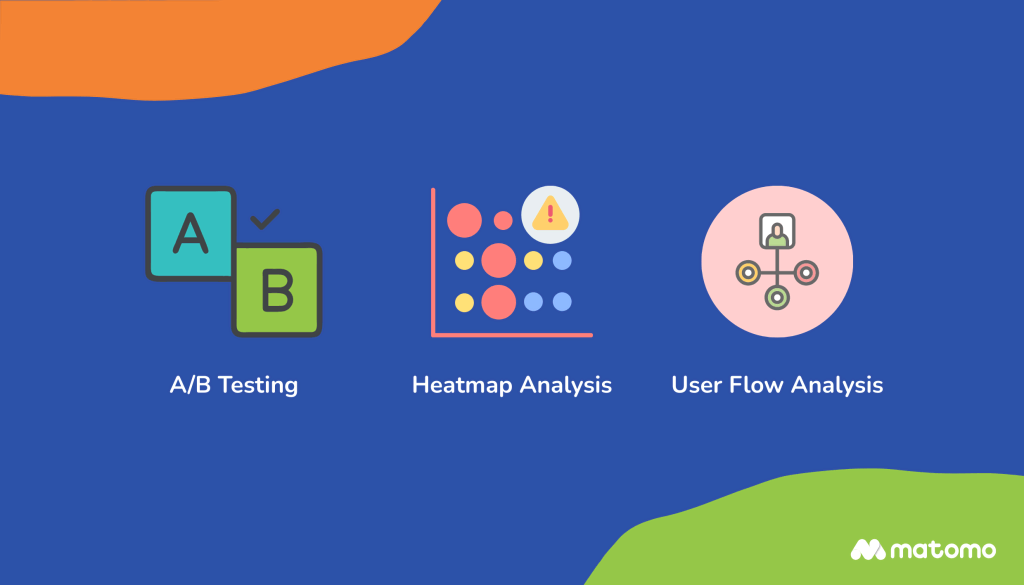
Descriptive analytics reveals what’s happening across campaigns, sales cycles and customer journeys. It uses techniques like A/B testing, cohort analysis, custom segmentation and visualisation to identify patterns and market trends.
Marketing teams need to understand how customers move through the buying journey. Descriptive analytics help spot issues and refine the customer experience through:
- Custom analytics dashboards: Shared team dashboards and personal views easily monitor a range of descriptive metrics.
- Funnel visualisation: Highlights where users exit or convert
- Heatmaps: Show which content gets attention and what’s being overlooked
- Cohort analysis: Tracks the engagement and retention trends of similar groups over time
- A/B testing: Compares alternate versions of a specific variable (like background colour or CTA placement) to see which is more effective.
Privacy-first perspective: It’s still possible to drill down into engagement and drop-off data without violating user trust or privacy regulations like the GDPR. With platforms like Matomo, teams can extract descriptive analytics from anonymised session data.
Diagnostics: Understanding the why
Diagnostic analytics investigates why things occur. Techniques like root cause analysis, custom reporting and correlation analysis uncover the drivers behind campaign performance.
Say that a social media ad campaign drives high web traffic but low conversions. Diagnostic analytics might reveal that the ads are targeting the wrong audience or that mobile users experience a slow-loading landing page.
Understanding these causes allows marketers to adjust targeting, improve page performance or redesign messaging for better results.
Privacy-first perspective: Diagnostic analysis can also use aggregated and anonymised performance data without tracking individual users. With Matomo, for example, marketers uncover root causes and solve problems without compromising privacy.
Predictive analytics: Forecasting what’s next
Predictive analytics combines historical data with statistical algorithms to anticipate future business outcomes. It predicts customer behaviour and future demand through techniques like trend analysis, regression modelling and machine learning.
For example, you can analyse trends in:
- Shopping frequency
- Ste visits
- Support requests
- Customer demographics
Fewer visits may mean that customers have unmet needs. Frequent contact with customer support can lead to frustration and erode trust. By analysing demographic and acquisition data, teams can uncover customer insights that reveal patterns across similar groups, allowing them to react quickly and strategically with targeted retention offers.
Privacy-first perspective: You don’t need external third-party data to anticipate behaviour or optimise campaigns. Training predictive models exclusively on first-party data allows teams to forecast accurately while still respecting user privacy.
Prescriptive analytics: Recommending the how
Prescriptive analytics helps marketers decide on the best course of action. It uses personalisation algorithms, recommendation engines and optimisation models to suggest specific actions to achieve desired outcomes.
Imagine that a subscription service wants to increase engagement and conversions. Prescriptive analytics might use:
- Cohorts: Recommending content, products, or offers that similar users enjoy.
- Recommendation engines: Suggesting similar, coordinating, or complementary items.
- Channel optimisation: Identifying the best communication time, format, or platform.
- Customer journey mapping: Recommending specific journey sequences.
- Inventory and pricing data: Adjusting prices to align with product availability and profitability targets.
- Churn risk scores: Proactive retention efforts for users most likely to churn.
Privacy-first perspective: Like descriptive and diagnostic analytics, prescriptive recommendations can be generated using aggregated user behaviour and anonymised patterns, so marketers can personalise campaigns ethically and responsibly.
Use cases: Real-world examples of advanced marketing analytics
Companies that use advanced marketing analytics uncover hidden opportunities, predict customer behaviour and make choices that directly improve results.
Below are key use cases demonstrating the impact of advanced analytics on real business outcomes:
Netflix: Predictive analytics
Netflix, a global leader in streaming, needed to engage subscribers while helping them navigate its vast content library. Retention hinged on predicting what each viewer wanted to watch next.
Using predictive analytics, Netflix analysed viewing patterns, searches and ratings to deliver personalised recommendations that adapt to every interaction. Today, up to 80% of Netflix watches come from these suggestions.
Here’s how this looks in the platform:

By improving discovery, Netflix boosts engagement, increases satisfaction and strengthens subscriber loyalty.
UniFida: Multi-touch attribution
UniFida is a UK-based customer data platform that helps businesses unify data. Recently, the company supported a holiday company to measure its return on marketing investment (ROMI) with multi-channel marketing attribution.
Despite investing in direct mail, affiliates, social media and paid ads, the company lacked visibility into which channels drove sales. UniFida implemented a multi-touch attribution (MTA) model that tracked online and offline touchpoints across the customer journey.
This analysis showed that over 50% of sales included a direct mail interaction, PPC drove strong conversions and other digital channels contributed less than 5%.
These insights gave the holiday company a clear breakdown of channel performance, enabling confident budget allocation and better marketing ROI.
How 7Assets balanced insights with data privacy
7Assets, a UK-based consulting firm, needed to analyse website behaviour without compromising client trust. Operating in a sector where privacy and compliance are non-negotiable, the firm required advanced analytics to understand visitor engagement and optimise campaigns.
Refusing to risk third-party tracking tools, the team adopted Matomo. By hosting Matomo on its own servers, 7Assets kept full control of its data and ensured compliance with GDPR and CCPA.
At the same time, Matomo’s funnel visualisation, custom segmentation, and goal tracking offer detailed insights into how people interact with their site.
This approach was a success. The firm improved user journeys, refined campaigns and increased client acquisition.
Why privacy matters in advanced analytics
With expanding data protection regulations, privacy is a critical consideration in advanced analytics. Collecting and analysing user data without proper safeguards can create legal, ethical and reputational risks.
Growing consumer awareness also makes privacy a key factor in trust and brand loyalty — both of which are essential for long-term business success.
Despite a clear trend towards privacy-conscious practices, the latest Salesforce State of Marketing Report shows that most teams’ analytics still hinge on third-party data.
These figures suggest there’s tension between leveraging rich datasets for insights and maintaining user trust, especially in a post-cookie world.
So what does this mean for advanced marketing analytics?
It means that there must be a balance between innovation and responsibility. Collecting necessary data, securing it properly and getting user consent are no longer optional — they’re essential to sustainable analytics strategies.
How principles of data privacy apply to advanced marketing analytics
To apply privacy effectively in advanced analytics, businesses should follow key principles drawn from regulations like the GDPR, CCPA and OECD:
- Data minimisation: Collect only what is necessary for analysis.
- User consent: Ensure transparent consent before processing personal data.
- Data security: Implement technical and organisational safeguards to protect data.
- Accountability: Maintain clear records and processes to demonstrate compliance.
The exact principles businesses must follow depend on the location of the company, the type of data it collects and its industry.
For example, companies operating in the European Union must follow the General Data Protection Regulation (GDPR) guidelines, while California residents’ data must follow the California Consumer Privacy Act.
Industries like healthcare have stricter rules (such as HIPAA), which require enhanced security and consent practices.
Advance your marketing analytics with Matomo
Ethical platforms can pair advanced marketing analytics with strong data privacy protection, so you can analyse behaviour, attribute conversions, and optimise campaigns while respecting user rights.
For example, with Matomo you can:
- Anonymise IP addresses and other unique identifiers and capture behavioural data without collecting personal information.
- Set retention limits for raw and aggregated data and support compliance and minimise exposure.
- Configure tracking cookies to auto-expire and limit long-term data collection.
- Disable visit logs and user profiles and focus on anonymised, aggregate trends.
Wondering how advanced analytics can deliver meaningful insights without compromising privacy? Explore Matomo’s privacy features to see how ethical analytics helps you understand behaviour, optimise campaigns, and make smarter decisions without risking user trust.
Start your 21-day free trial to take control of your data. No credit card required.