
Data privacy regulations are evolving, customer expectations are rising and businesses need the right tools to build trust and stay compliant.
Data privacy management software comes in many different forms. There are consent managers, mapping tools, breach response systems, vendor risk platforms, and more.
This guide explains the main categories of privacy management software, what each type does and when to use it. We’ll also show you how to map your organisation’s needs to the right type of tool and highlight five tools that showcase different approaches to data privacy management
What is data privacy management software?
Data privacy management software helps businesses properly handle personal data, protect user privacy and comply with privacy laws such as the GDPR and CCPA, as well as other global regulations. These platforms range from simple consent tracking tools to comprehensive systems for ensuring compliance across an entire organisation.
Here are some of the standard features:
- Consent management: Collecting and recording user consent for data collection and processing activities.
- Data subject request handling: Automating and tracking requests from people who want to access, correct or delete their data.
- Granular tracking and auditing: Monitoring data flows across systems, providing a detailed record of who accessed what and when.
- Policy automation and compliance templates: Simplifying compliance with privacy policy templates and automatic updates as regulations change.
- Third-party risk management: Verifying that external tools and partners follow the same privacy and compliance standards.
- Customisable reporting and alerts: Automated reporting and custom notifications to identify compliance risks early.
The primary objective of these tools is to enhance data privacy protections and support compliance with requirements such as the ePrivacy Directive implementing laws (e.g., PERC (the UK), TDDDG (Germany), LSSI (Spain), TKG (Austria), the General Data Protection Regulation (GDPR) and the California Consumer Privacy Act (CCPA).
Different types of data privacy management software
Data privacy management software is an umbrella term for platforms that address specific parts of compliance and data protection. Below are some of the most common types of privacy management software, along with their primary use cases.
| Consent management software | Collects, stores and updates user consent preferences |
| Data mapping and inventory software | Identifies where personal data is stored and how it flows across systems |
| Privacy risk assessment software | Evaluates data processing risks and supports DPIAs |
| Data subject rights management (DSR) software | Automates requests to access, correct, or delete personal data |
| Breach management and incident response software | Detects, logs and guides response to data breaches |
| Third-party risk management software | Monitors vendor risk and stores audit trails. |
| Data anonymisation, pseudonymisation and tokenisation software | Masks/replaces/removes personal identifiers to protect privacy. |
Matching your needs with the right privacy solution
Before comparing vendors, make sure you know which type of privacy management platform you’re looking for. Use the guide below to match your needs with specific tool capabilities and use cases.
If you need to…
- Collect personal information online and prove lawful consent:
- Consider consent management software to:
- Update cookie consent banners.
- Manage user preferences and Consent Mode.
- Document audit trails.
- Consider consent management software to:
- Inventory and secure personal data across your organisation:
- Consider data mapping and inventory software to:
- Scan databases/clouds.
- Visualise data flows.
- Support compliance audits.
- Consider data mapping and inventory software to:
- Implement new data processing activities or technologies:
- Consider privacy risk assessment software to:
- Conduct DPIAs (Data Protection Impact Assessments).
- Assign risk levels.
- Document mitigation plans.
- Consider privacy risk assessment software to:
- Respond to frequent privacy rights requests:
- Consider data subject rights (DSR) management software to:
- Automate intake and identity verification.
- Update privacy notices.
- Consider data subject rights (DSR) management software to:
- Handle breaches or other privacy incidents:
- Consider breach and incident management software to:
- Detect, log and assess the severity of events.
- Support internal audit and compliance efforts.
- Consider breach and incident management software to:
- Assess and manage vendor risks:
- Consider third‑party risk management software to:
- Perform vendor risk assessments.
- Monitor third-party compliance.
- Centralise contracts and certifications.
- Consider third‑party risk management software to:
- Protect individual privacy while working with large datasets:
- Consider data anonymisation & tokenisation software to:
- Mask and anonymise personal identifiers.
- Support data minimisation principles.
- Consider data anonymisation & tokenisation software to:
Consent management software
Consent management software collects, records and manages user consent for data processing. The platforms display cookie consent banners or pop-ups that inform users about how their data will be used. Users can then choose which types of data collection they accept.
The software stores these preferences and updates records if someone changes their settings. For example, if a user wants to withdraw their contact information, the system updates to reflect this change.
It logs every consent action in accordance with relevant privacy laws, such as the ePrivacy Directive, which requires opt-in for all trackers and non-essential cookies.
Privacy-centric analytics platforms, like Matomo, also support Consent Mode. This means tracking is adjusted based on user choices.
Note: Consent is one lawful basis under GDPR. Some data processing activities may use other bases, such as contractual requirements or legal obligations.
Best for: Businesses that collect personal data from users online and need to maintain transparent records for compliance.
Data mapping and inventory software
Data mapping and inventory software identify where personal data is stored and how it flows across systems. The platforms automatically scan databases, servers and cloud tools to locate personal information and map its journey within the organisation.
This visibility is crucial for data governance. It helps businesses understand:
- What data they have
- Where it resides
- How/With whom it’s shared
The system monitors who’s accessing data and why, giving compliance teams a clear picture of data handling practices. This helps them spot potential risks early on.
Best for: Organisations that need visibility into where personal data is stored and how it’s used across systems.
Privacy risk assessment software
Privacy risk assessment software lets businesses identify and mitigate potential data breaches. The technology assesses how personal data is collected, stored and shared, and assigns risk levels accordingly.
The software also helps businesses conduct Data Protection Impact Assessments (DPIA), which are a key requirement under GDPR. Other privacy laws globally also require data controllers to carry out privacy impact assessments. The system:
- Documents the purpose of data processing
- Assesses potential privacy risks
- Evaluates the necessity and proportionality of the activity
- Records mitigate measures
Best for: Companies performing privacy impact assessments for new data processing activities or third-party technologies.
Data subject rights management (DSR) software
DSR software automates Data Subject Access Requests (DSARs), such as when individuals request access to, correct or delete their personal information. The platform speeds up request intake, verifies identities and tracks progress to ensure responses meet legal timeframes.
Each request is logged and managed through a central dashboard, reducing manual effort and helping businesses meet their applicable privacy law or other compliance obligations.
Best for: Businesses that regularly receive data requests and need to manage them quickly and accurately.
Breach and incident management software
Breach and incident software detects, documents and responds to data breaches or security incidents. The platforms automatically log potential breaches, assess their severity and guide teams through the best way to address or mitigate the issue.
Here are some of the common causes of data breaches:

Data breach features allow organisations to respond quickly to these incidents, reducing damage and maintaining compliance.
The software helps teams assess whether the incident requires regulatory reporting and prepares notifications for authorities and affected individuals.
Best for: Organisations that need a reliable data breach and incident response process.
Third-party risk management software
Third-party risk management systems evaluate and monitor the privacy practices of external vendors and partners. This means businesses can identify potential compliance gaps and reduce the risk of data breaches through their vendor networks.
It uses automated questionnaires, risk scoring and continuous monitoring techniques to verify that third parties meet compliance standards.
The platform also stores documentation, such as contracts, certifications, and audit reports to provide an up-to-date record of each vendor’s compliance status. Alerts immediately notify teams of changes or risks, so they can respond quickly.
With Matomo’s OneTrust Tag Manager integration, teams can align tracking practices with their broader third‑party management processes and vendor risk workflows.
Best for: Privacy operations that rely on external vendors and need to ensure they comply with data protection laws.
Data anonymisation, pseudonymisation and tokenisation software
Data anonymisation software permanently and irreversibly removes or alters identifiers so that they cannot be linked back to an individual, making personal information unidentifiable. If effectively anonymised, datasets fall outside the scope of privacy laws, such as the GDPR.
By removing or replacing identifiers with tokens and prioritising data minimisation, businesses protect personal information.
Masking, encryption and tokenisation usually create pseudonymised data, which still counts as personal data under GDPR, even though it’s better protected
Best for: Organisations that analyse large datasets but must protect individuals’ identities and comply with privacy regulations.
Top data privacy management software
Here are five top data privacy solutions that help businesses collect, manage, and use data responsibly.
| Consent management | Data anonymisation or pseudonymisation | Use Cases | |
| Matomo | Built-in consent tools + CMP integrations | IP anonymisation + masking | Privacy-first analyticsOpt-out mechanisms |
| OneTrust | Enterprise-grade CMP | Full masking | AI discoveryPolicy automation |
| Osano | Cookie + vendor consent | Basic masking | Lightweight CMPReal-time alerts |
| TrustArc | Consent lifecycle tools | Full anonymisation | DPIAsRisk dashboards |
| BigID | CMP via integrations | Advanced pseudonymisation | AI mappingRisk scoringData classification |
1. Matomo: A privacy-first web and analytics system
Matomo is a privacy-first analytics platform that allows teams to capture and analyse 100% of user actions while respecting user privacy. Trusted by over one million websites across 190+ countries, it offers full data ownership, no third-party sharing and unsampled, accurate reporting.
Matomo captures traditional web metrics (like visits, traffic sources, and conversions) and can be configured to support compliance with strict global privacy laws, including GDPR, ePrivacy implementing laws, CCPA, PECR, HIPAA, and LGPD.
Matomo On-Premise is one of the few analytics solutions that give teams full control over their data by allowing them to self-host their analytics data. And, it’s free.
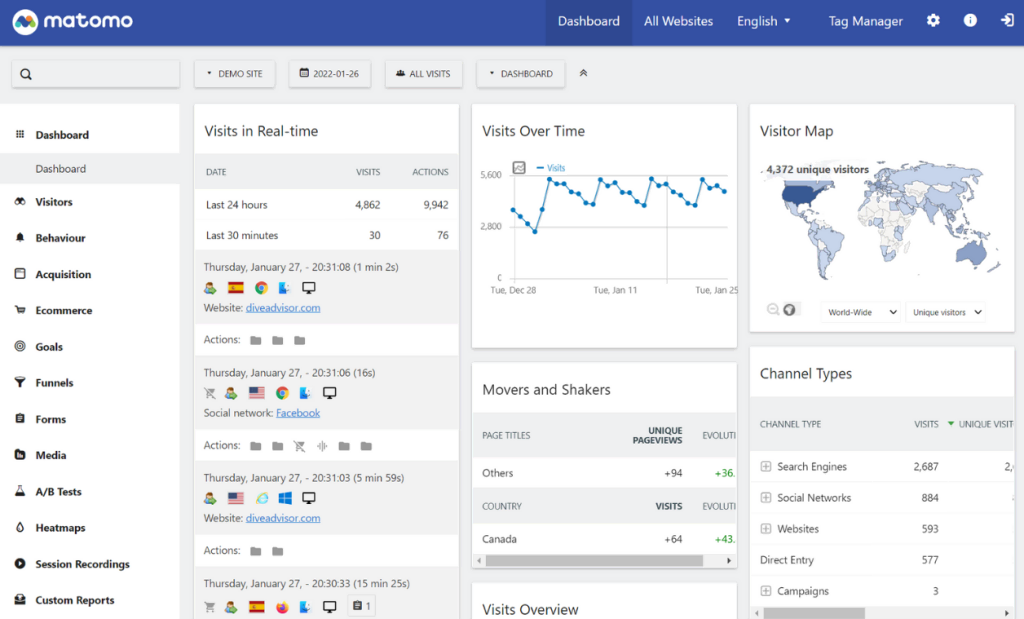
Matomo’s web analytics dashboard
Many businesses use tools like Google Analytics without realising how much data they’re exposing to third parties. Unlike platforms that sample or externalise data, Matomo On-Premise provides complete data ownership and sovereignty.
Best suited for: Businesses that need privacy-first analytics or open-source flexibility.
Key features:
- Built-in GDPR manager
- Self-hosted or cloud-based deployment options with configurable compliance settings
- IP anonymisation and data masking features, other data minimisation and retention controls
- No data sampling
- No third-party data sharing
- Advanced segmentation, custom reporting, session recordings and heatmaps
Why it’s worth using:
- Integrates with cookie consent banners and most CMSs and CRMs
- Supports strict regulatory standards without sacrificing insight
- Complete data sovereignty, transparency and open-source flexibility
2. OneTrust: Privacy, risk and compliance management software
OneTrust is a privacy management platform built for enterprises dealing with complex, global data protection requirements. The solution offers tools to manage privacy, risk, and governance at scale.
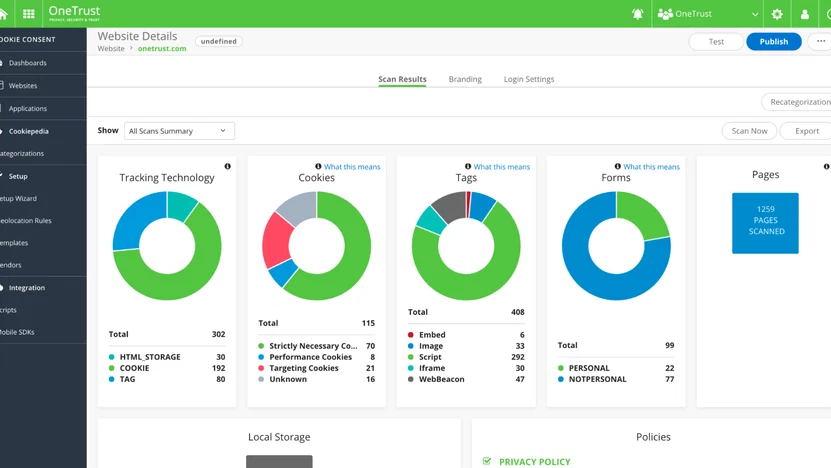
OneTrust’s website details dashboard
Best for: Large organisations subject to strict compliance standards.
Key features:
- Comprehensive privacy, security and governance suite
- Consent management across multiple devices and jurisdictions
- Data mapping and third-party risk monitoring
- AI-driven data discovery and classification
Why it’s worth using:
- Enterprise scalability
- Strong support and integrations
3. Osano: Cookie compliance and consent management platform
Osano is a lightweight privacy solution focused on cookie compliance and consent management.
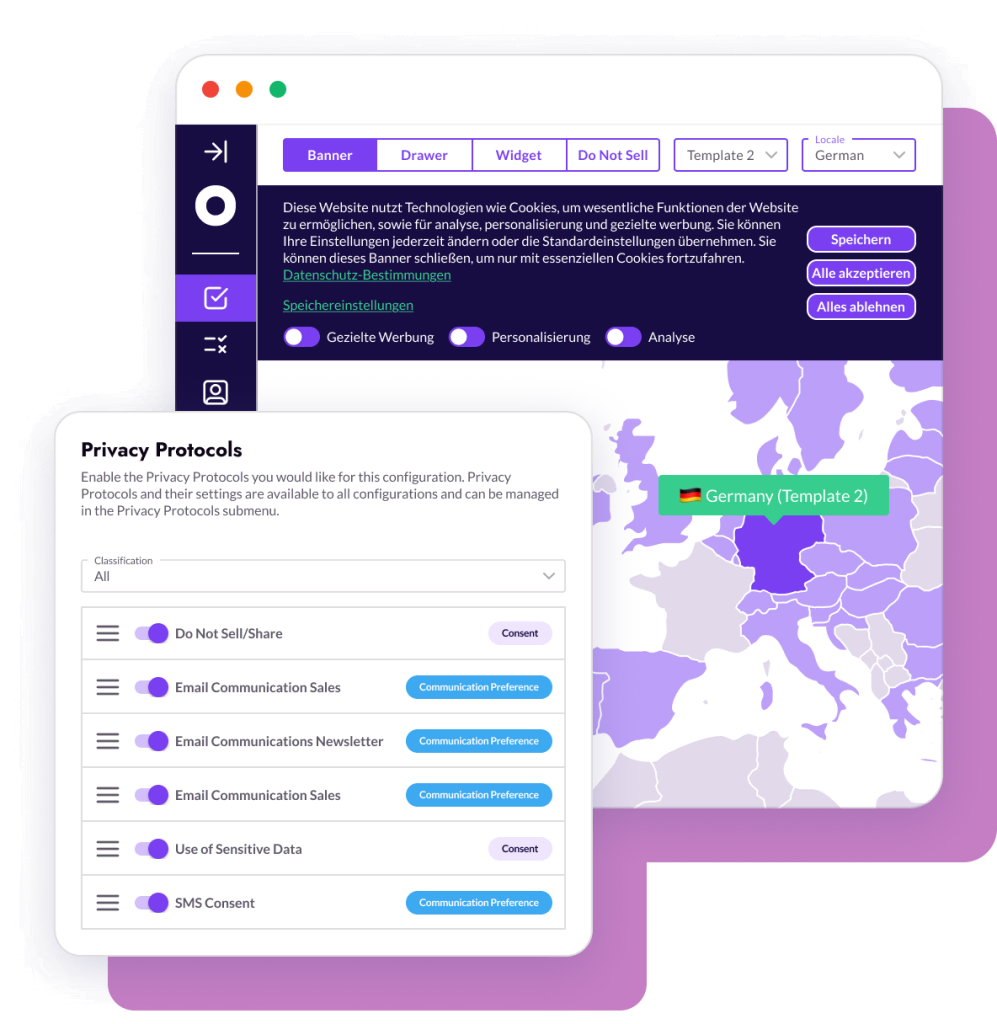
Osano’s privacy compliance dashboard
It offers automated consent banners, centralised tracking and real-time policy updates.
Best for: Small to mid-sized businesses that need a lightweight tool.
Key features:
- Easy-to-implement cookie banners and preference forms
- Real-time compliance status and policy change alerts
- Legal templates and pre-built settings for major laws (GDPR, CCPA)
4. TrustArc: Privacy and data governance platform
TrustArc is a privacy solution that helps businesses map and monitor data flows and manage privacy risks.

TrustArc’s data privacy laws dashboard (Image source: TrustArc)
It can also automate data inventories, risk assessments and compliance reporting.
Best for: Mid- to large-sized businesses that require centralised oversight of data usage and privacy risk.
Key features:
- Inventory and flow visualisation
- Consent lifecycle management
- Templates for GDPR, CCPA and other frameworks
5. BigID: AI-powered data intelligence and sensitive data management platform
BigID is a data intelligence platform that uses machine learning to find and classify sensitive information across the organisation. It provides audit-ready DSAR reporting and automated DSAR workflows.
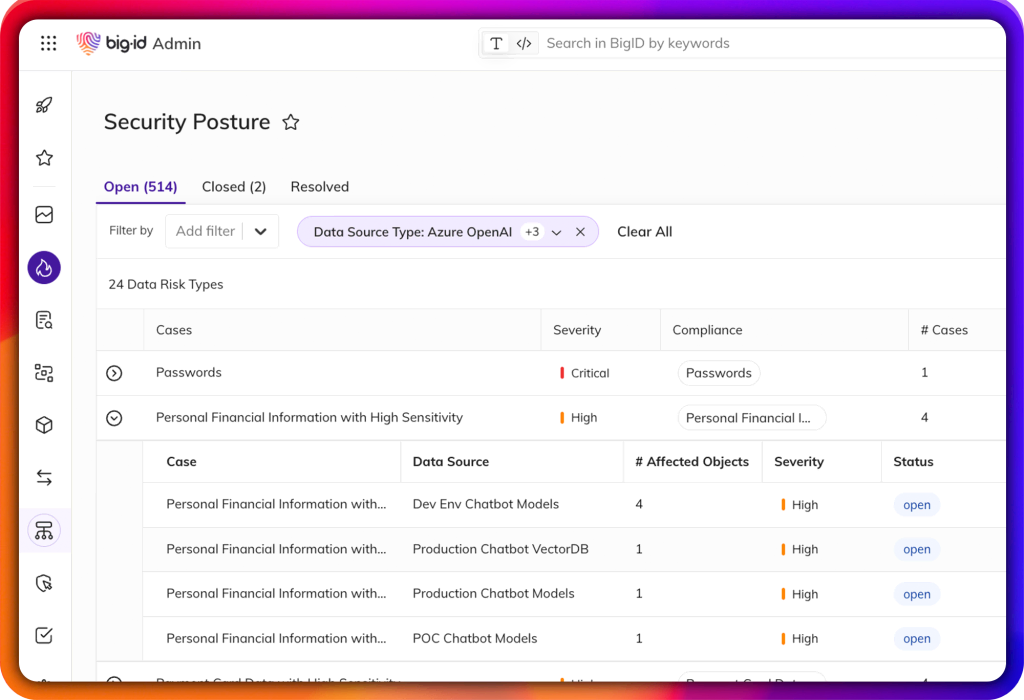
BigID’s security dashboard (Image source: BigID)
Best for: Organisations that need to quickly locate and manage sensitive data at scale.
Key features:
- Automatic identification of PII, personal health information (or PHI, which is specific to US HIPAA law) and other regulated data
- Integrations with cloud platforms, SaaS apps and data lakes
- Custom privacy workflows for managing compliance and risk
What’s in store for data privacy in 2026?
Data privacy is evolving rapidly, driven by stricter regulations, growing consumer expectations and the rise of AI.
More countries are implementing privacy and AI laws, making global compliance far more complex. Here are a couple of examples:
- New EU and UK developments
Evolving privacy obligations in 2026 include the EU’s Digital Omnibus Act and the UK’s updated Privacy and Electronic Regulation Code (PERC). These frameworks are strengthening cookie consent rules, cross‑border enforcement, and AI accountability.
Establishes a national framework for processing personal data, emphasising user consent, data minimisation and cross-border data transfer controls.
- Expanding regulations
Several states in America have enacted their own privacy laws (like California’s CCPA and Virginia’s CDPA), each setting unique requirements for data collection, user rights and business obligations. Use the US State Privacy Legislation Tracker to keep up with changes.
- AI accountability
The EU AI Act outlines regulations for AI systems. It entered into force in 2024 and is being implemented in phases, with initial provisions beginning in 2025 and the majority becoming enforceable in August 2026. Full compliance across all categories extends into 2027.
Businesses should expect stricter disclosure requirements around:
- Communicating with customers regarding AI.
- Explaining how automated decisions are made.
- Documenting the data sources used to train AI models.
As a result of these tighter data regulations, we expect a continued increase in steep fines and public investigations into AI compliance. Regulators are already ramping up enforcement against major tech companies:
- Meta’s €1.2 billion fine as a result of an EDPB binding decision, which found violations in data transfers between the EU and the U.S.
- CNIL’s 2024 enforcement report shows how France’s data protection authority introduced a simplified sanctioning process to resolve minor cases quickly. It allows the CNIL to issue fines without a full committee review.
Simplify data privacy compliance with Matomo
The right data privacy software will depend on your organisation’s specific needs, whether that’s consent tracking, data mapping, or incident response. This guide broke down the different categories of privacy management software to help you determine which one meets your business requirements.
Matomo supports compliance efforts by offering privacy-first analytics and integrations with platforms like OneTrust and Osano.
Over a million websites choose Matomo because it delivers real insights — without compromising user privacy or data ownership
Start your 21-day free Matomo trial today. No credit card required.